
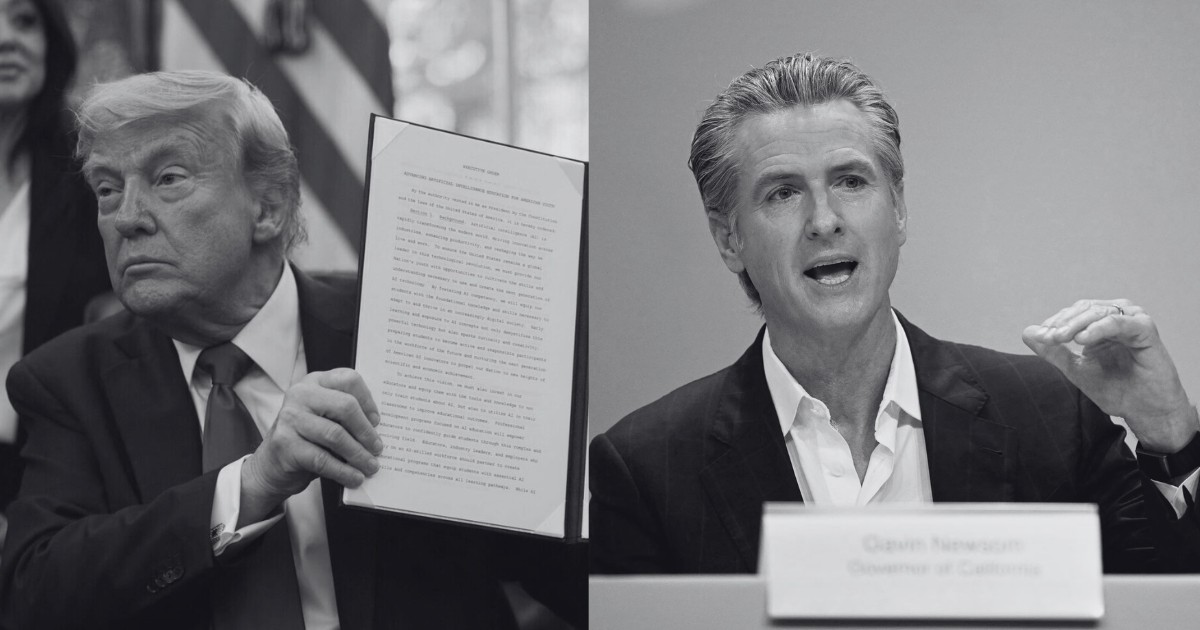
When the curtain closed last month on the 2025 United Nations Climate Change Summit held in Belém, Brazil, one of the biggest issues discussed was the absence of the United States. The Trump administration boycotted the summit and is actively reversing course on policies aimed at reducing greenhouse gas emissions, a move that has many world leaders concerned.
However, the United States was not completely absent from the climate summit, commonly referred to as COP30. With federal officials absent, U.S. governors, mayors, and community leaders from across the U.S. stepped up to showcase substantial regional and local progress being made on climate action in the United States.
The presence of U.S. state and local leaders on the world stage highlights a shifting landscape in which climate action is increasingly propelled by those closest to the impacts and challenges, rather than by federal directives. With a leadership vacuum at the national level, state governors and city mayors are filling the void and continuing to make progress in actively addressing climate change.
At COP30, these state and city leaders highlighted their progress on reducing emissions and expanding clean energy. They sent a clear message to world leaders that the United States remains committed to climate action and continues making measurable strides toward its emissions and renewable energy goals.
The 2015 Paris Agreement: 10 Years Later
A central focus at COP30 was on the 2015 Paris Agreement on climate change, and nations’ progress and struggles to meet the agreement’s goals.
Signed in 2015, the Paris Agreement united 194 countries in a pledge to keep global warming well below 2 degrees Celsius (3.6 degrees Fahrenheit) and to pursue a tougher 1.5-degree Celsius limit (2.7 degrees Fahrenheit). Each nation agreed to set and update its own goals for curbing emissions and reporting progress regularly, while wealthier countries committed to delivering finance and support for adaptation and clean energy in developing nations.
Ten years later, as COP30 convened in Brazil, all eyes were on the Paris Agreement and whether its goals had been upheld. The results were mixed at best, with many nations falling short of their goals and scientists forecasting that global temperatures will likely exceed the 1.5 degree Celsius threshold, at least temporarily, unless more aggressive measures are taken.
Nonetheless, nations presented updates on their progress and difficulties in meeting the pledges made under the agreement. Nations also presented policy updates, new climate finance mechanisms, and strategies to accelerate low-carbon transitions in sectors like energy, transportation, and agriculture.
As for the U.S., currently, the Trump administration is in the process of withdrawing from the Paris Agreement, the only nation to do so. However, many U.S. cities and states are continuing with their own goals to curb emissions and invest in clean energy.
U.S. States and Cities Lead The Way
With the Trump administration absent, a U.S. delegation of over 100 local and state leaders attended COP30, delivering a message of steadfast commitment to tackling climate change. The delegation included U.S. governors, mayors, and top officials from dozens of U.S. cities and states. Leaders emphasized that the U.S. remains a dedicated partner in the global effort to combat climate change.
The delegation included governors from the U.S. Climate Alliance, a coalition of states formed in response to the federal government’s withdrawal from the Paris Agreement. The Alliance now includes 24 governors, who together represent roughly 60 percent of the U.S. economy and 55 percent of its population.
“The Alliance looks forward to catalyzing even deeper partnership and action in Brazil, where we’ll make sure the world knows that no matter the obstacles, we’re charging forward,” said Wisconsin Governor Tony Evers.
California Governor Gavin Newsom echoed that sentiment, stating, “It’s a global competitive responsibility for us to now assert ourselves more forcefully in the absence of national leadership.”
Additionally, nearly 350 U.S. cities were represented by Climate Mayors, a bipartisan network of mayors demonstrating climate leadership through meaningful actions in their communities.
“American cities have always been at the forefront of innovation and climate action, and mayors across the country are doubling down to fill the current void of leadership at the federal level,” said Phoenix Mayor Kate Gallego, the chair of Climate Mayors.
The statements and pledges made by U.S. governors and mayors were reinforced by their concrete actions. For example, the U.S. Climate Alliance reported that as of 2023, member states have collectively reduced net greenhouse gas emissions by 24% below 2005 levels, while boosting collective GDP (Gross National Product) by 34%.
California Grabs the Spotlight
At COP30, California Governor Gavin Newsom took center stage as a featured speaker at numerous forums and events. As the fourth-largest economy in the world, California is widely viewed by other nations as a global leader in addressing climate change.
That fact was not overlooked by the California governor, who used the international stage to spotlight California’s achievements, emphasizing the state’s ongoing efforts to lower greenhouse gas emissions and invest in clean energy, all while fostering economic growth.
“California operates as the fourth largest economy in the world every day, with two-thirds of its energy sourced from clean energy,” Newsom said at an international press forum. “We have seven times more green energy jobs than we do fossil fuel jobs, we reduced greenhouse gases since 2000 by 21 percent, and our GDP has grown 81 percent.”
Newsom’s claims are backed by a 2025 California State Report issued earlier in November. The report documents that California:
showed a 3% drop in statewide greenhouse gas emissions in 2023—the third-largest annual percentage decrease since tracking began in 2000. The decrease is equivalent to removing more than 2.6 million gasoline-powered cars from California’s roads for one year.
realized record-breaking sales of zero-emission vehicles (ZEVs), with 29.1% of all new cars purchased in the third quarter of 2025 being ZEVs.
made progress in the electricity sector, with wind and solar representing over 30% of generation, and in-state solar increasing by 8% from 2022.
passed legislation with emission and clean energy mandates to keep California on track to become a carbon-neutral state by 2045.
While Newsom clearly grabbed the spotlight at COP30, it remains to be seen whether California’s efforts, together with other U.S. states and cities, can make up for the withdrawal by the Trump administration from climate change initiatives at the federal and international levels.
Despite States’ Efforts, the U.S. May Still Fall Behind
As COP30 came to a close, some policy experts voiced their skepticism over the U.S.’s ability to meet climate change goals under the Paris Agreement. Among them is Joshua Busby, Professor at the Lyndon B Johnson School of Public Affairs at the University of Texas. Busby was a Senior Climate Advisor in the Biden administration and is currently authoring an analysis of COP30’s international policy outcomes.
“I'm not convinced that subnational and civil society actors can make up for the absence of the federal government,” said Busby. He notes that under the Trump administration, the federal government is actively undermining states’ deployment of clean energy initiatives, setting back U.S. decarbonization efforts.
But Busby does see a silver lining in the fact that the clean energy economy is moving forward at a record pace, rapidly making wind and solar development a reality, even in less climate-friendly states like Texas.
“There are two trends,” said Busby. “There's the market developments that have made clean energy the cheapest, fastest forms of energy to deploy. And then there's the political thumb on the scale from the federal government that is trying to stop all that.”
The professor cautions that the U.S. may be in danger of falling behind internationally in the technology and clean energy sectors if it continues to adhere to outdated fossil fuel technologies.
“The US is at risk of becoming sort of a fossil fuel island that is beholden to 19th and 20th-century technologies at a time when the electrification of more sectors of the economy, including power, transport, and other sectors, is going to be the future of energy generation,” he said.
And so, with the closing of the COP30 Climate Summit, the U.S. seems to be at a crossroads, with states and clean-energy markets moving in one direction and the federal government moving in another. And Professor Busby acknowledges that which direction prevails is very much up in the air, commenting, “I'm not sure what will win.”
Stay tuned….